
Are you the proud owner of a property that includes a deck? Decks are appealing additions to any home or business because they are excellent places to spend time. Whether you’re having a barbecue with your friends or giving your customers a scenic place to eat their food, there’s no denying the popularity of decks. However, decks will lose their appeal if they’re allowed to deteriorate, and this will lead to all sorts of additional problems. That’s why it’s important to keep your deck clean! In this blog, learn how to power wash a deck with Water Works Services, a locally owned pressure washing business.
Why Learn How to Power Wash a Deck?
So, why exactly should you learn how to power wash a deck? As outdoor structures, decks are particularly prone to becoming dirty. In fact, it’s essentially guaranteed that your deck will gather unwanted debris over time. Step outside and check out your deck. You might find that it’s already smothered with dirt, pollen, dead insects, moss, mold, algae, etc. It goes without saying that these substances don’t help your deck’s overall appearance. As a matter of fact, they make your deck look significantly worse!
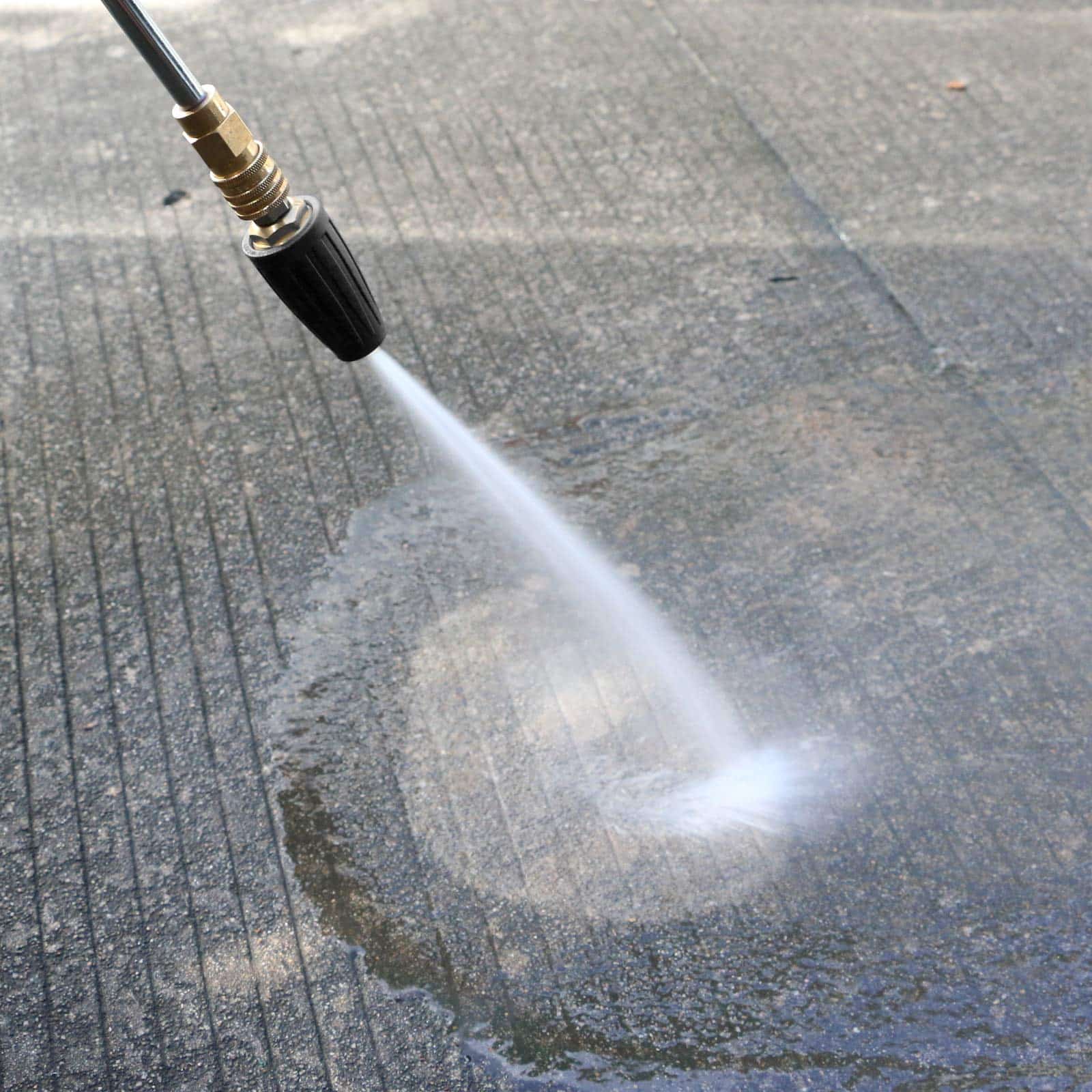
We highly recommend that you use the power washing technique to revitalize your deck. Power washing uses jets of pressurized water to remove debris from exterior surfaces. This leaves surfaces in stunning visual condition! Power washing is a must for any property owner with a deck. We highly recommend annual deck power washing—are you already overdue for service?
Equipment Needed For Deck Cleaning
So you want to learn how to power wash a deck. If so, you’ll need to purchase all the necessary equipment for the work. We’ve included a bulleted list below for your convenience. Do you have all these items already, or will you need to purchase them?
- Pressure Washer. This piece of machinery connects to a water source and highly pressurizes water so it can be sprayed onto exterior surfaces.
- Hose and Nozzle. A connecting hose and nozzle give you control over pressurized water so you can clean your deck with precision.
- Cleaning Solutions. With a basic pressure washing detergent, you’ll streamline the cleaning process. We also recommend having sodium hypochlorite on hand.
- Safety Gear. Finally, don’t forget protective clothes and equipment, including goggles, gloves, full-length pants, and closed-toe shoes.
Preparing Your Deck For Power Washing
Once you have all the correct equipment, you’re one step closer to doing your own deck cleaning. However, before anything else, you’ll need to prepare your deck for power washing. First and foremost, you’ll need to remove all items from the surface. It’s very likely that your deck has furniture and decorations on it. If so, make sure you pick them up and move them to a safe, temporary location. That way, they won’t be damaged by pressurized water. Plus, they won’t get in the way of your power washing work.
We also recommend making sure you have enough free time to finish your power washing project without having to rush. If you have a pressing appointment in a few hours, it’s probably not appropriate to leap into a deck power washing project. On the other hand, if you have the entire day to yourself, there’s no better time to start the work.
Choosing the Correct Water Pressure
Now that your deck is cleared off, you’re just about ready to begin power washing. However, there’s one final preparation to make—selecting the correct amount of water pressure. This isn’t a “one-size-fits-all” thing. The right setting actually depends on your deck’s material. We’ve included a list of the most common deck materials, as well as how much water pressure you should use to clean them:
- Composite: 500–1000 PSI
- Softwood: 1000–1500 PSI
- Hardwood: 1500–2000 PSI
- Metal: 2000–2500 PSI
Before spraying your deck in its entirety, you’ll want to test the spray in an inconspicuous area. While doing so, keep your eye on the surface and see how it reacts. If it doesn’t seem to be damaged, you’ve got the green light to move along with the project. (Don’t forget to put your detergent into your pressure washer’s tank.)
The Deck Power Washing Process
At long last, all preparations are complete. Now you can begin the exciting part of learning how to power wash a deck: the power washing itself! We recommend choosing one of the corners as a starting point. Then, power wash the deck from one corner to another. Continue in a controlled, row-by-row approach, slightly overlapping each pass to ensure no surface area is left uncleaned. This allows you to easily keep track of what you’ve already washed and what still needs your attention.
What happens when you come across stubborn debris that won’t rinse away? When you find yourself in this predicament, powerful cleaning solutions like sodium hypochlorite will come in handy. Simply apply a thin layer of this substance to the deck. (You can do this with a spray bottle if your pressure washer’s tank is already full.) Next, wait fifteen minutes for debris to be broken down. Finally, power wash the area again. You should find that grime that was once too tough to rinse away is a breeze to get rid of.
Consider Professional Deck Cleaning
Learning how to power wash a deck is challenging work. In fact, there are many difficulties that you’ll encounter along the way. The physical strain, the time commitment, learning how to use power washing equipment… and the list goes on. If you want to completely avoid this DIY project, consider reaching out to Water Works Services. We are a locally owned and operated business, and it’s always our pleasure to power wash decks for our Chesapeake, VA neighbors.
Not only will we completely revitalize your deck, but we’ll also do it for a fair price. Contact us online with a description of your project, and we’ll get back to you as soon as possible with a free cost estimate. Then it’s up to you to choose a time and date for your appointment. We hope to see you soon.