Is there mold growing on your concrete? When this unwanted growth appears on your driveway, parking lot, pool deck, or any other concrete surface, it can be frustrating enough to make your head spin. So, what should you do about this problem? Don’t just hope that mold will go away on its own. Instead, learn how to remove mold from concrete so you can reclaim its beauty! That way, you can make your property a better-looking, more hygienic place.
At Water Works Services, concrete cleaning is one of our specialties, and we are excited to teach you more. Or, you can reach out to us for an appointment. Our Virginia Beach professionals will be happy to clean your concrete so you don’t have to.
Why Mold Removal Is Important
You may not have realized this, but mold spores are constantly floating through the air. When these spores land on concrete, they can grow if the conditions are right. Once this mold reaches maturity, it will begin releasing spores of its own, negatively affecting the air quality near your property. Not only that, but these spores are more likely to land on other surfaces on your property, allowing mold to spread with alarming speed.
Make your property more beautiful and healthier by learning how to remove mold from concrete. By eliminating mold from your concrete, you’ll enjoy a number of benefits, including the following:
- Cleaner surfaces that aren’t as slippery
- Reduced allergy symptoms
- Lowered risk of surface deterioration
- Increased curb appeal
What Will I Need For Mold Removal?
If you want to learn how to remove mold from concrete, you will need to purchase the correct equipment first. First and foremost, you will need a pressure washer. This machine connects to a water source and uses a pump to increase the water pressure. Then, this water is sprayed through a hose and onto exterior surfaces. The resulting jets of water are powerful enough to remove all kinds of debris—and yes, that includes moss!
In addition to a pressure washer, make sure you have the following:
- Hose and Nozzle: So you can aim pressurized water at exterior surfaces.
- Basic Detergent: Makes the pressure washing process more effective.
- Sodium Hypochlorite: To kill and weaken even the toughest mold patches.
- Stiff-Bristle Brush: To disturb deep-seated mold spores in concrete.
- Respirator: So you don’t inhale dangerous mold spores during the work.
- Other Safety Gear: You should also wear gloves, goggles, and closed-toe shoes.
Mold Removal Safety Precautions
When learning how to remove mold from concrete, you should always put your safety first. Mold is unsightly, but in addition to that, it’s also bad for your health—and the last thing you want is a lungful of spores while you’re doing your work.
We can’t stress this enough: always wear a respirator when removing mold from surfaces. A P100 respirator is an excellent choice because it filters out more than ninety-nine percent of airborne particles. Additionally, cover your skin to avoid rashes; we recommend wearing long sleeves and full-length pants.
Preparing the Surface For Pressure Washing
Before you can learn how to remove mold from concrete, you’ll need to prepare the area for the project. The first thing you should do is remove any items from the surface. For example, if you are going to pressure wash a driveway, find a temporary location where you can park your cars. Or, if you are going to pressure wash your deck, move furniture and decorations somewhere else. This ensures they don’t become obstacles during your work or get damaged by pressurized water.
Next, you will want to apply sodium hypochlorite to any moldy areas. We recommend using a spray applicator to do this. Put a thorough layer of this chemical on the concrete; then, wait fifteen minutes for it to kill mold. Not only will sodium hypochlorite kill mold, but it will also weaken other forms of debris, such as dirt, pollen, grease, etc.
Removing Mold With Pressure Washing
After chemical treatment, it’s time to target mold with extreme prejudice. First, use a hard-bristle brush to scrub any patches of mold. This brush will break down mold and even lift its spores from the pores of your concrete. It also loosens mold’s hold on surfaces; that way, it can be even more easily removed via concrete pressure washing.
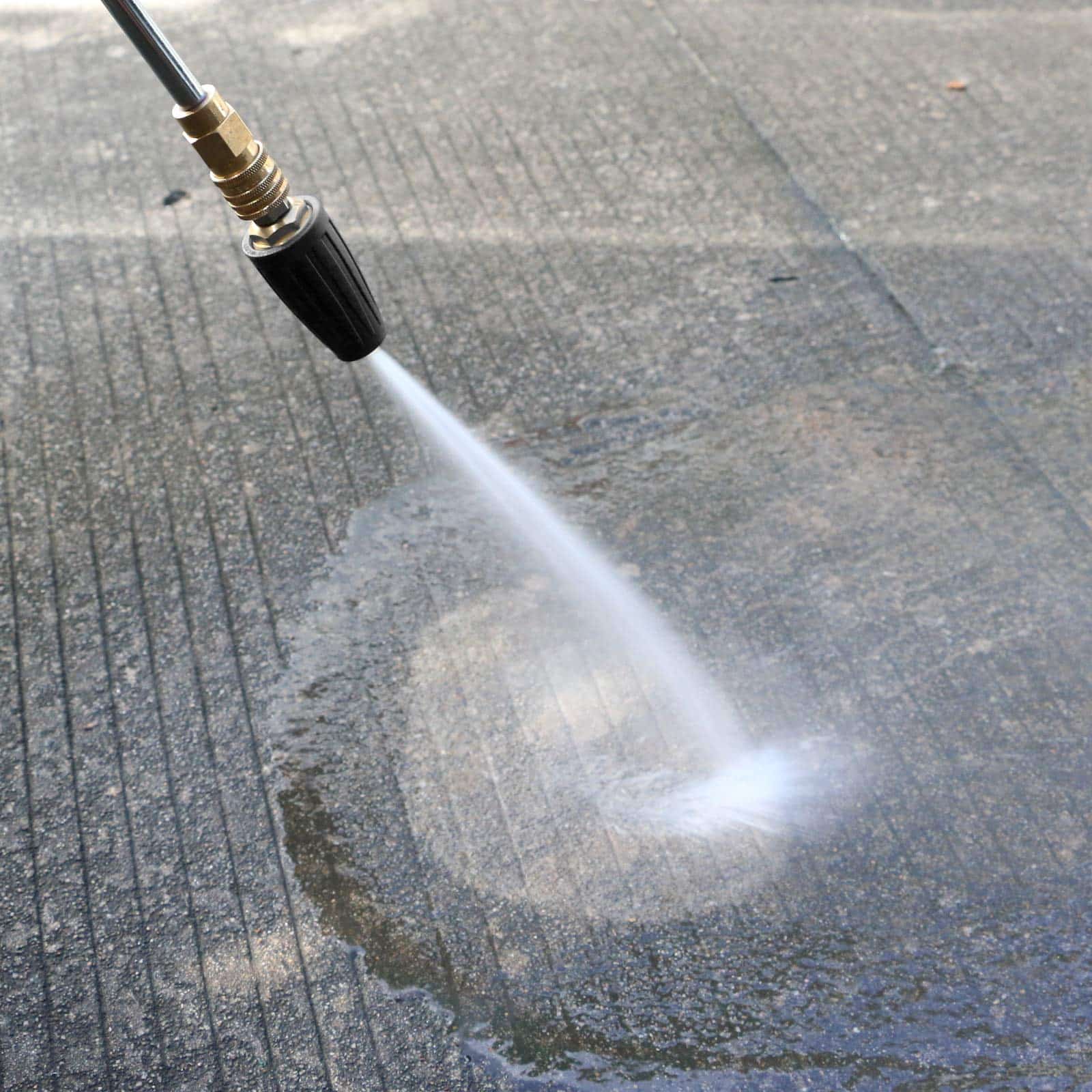
After brushing, set your pressure washer to an appropriate water pressure setting. For concrete cleaning jobs, we recommend between 3,000 and 3,500 PSI. Use high-pressure water to wash away mold, as well as other kinds of debris. By working in a simple gridlike fashion, you’ll be able to completely revitalize your concrete’s appearance. See for yourself as you do the work. The difference between unwashed concrete and recently washed concrete is like night and day!
Consider Professional Concrete Mold Removal
Learning how to remove mold from concrete isn’t easy work. As you’ve discovered, it takes a specific set of equipment, as well as your time and energy, to do the work correctly. If you lack any of these resources, you won’t be able to remove moss from your concrete, but don’t worry. There’s an alternative to DIY concrete cleaning. By reaching out to Water Works Services, you’ll fully revitalize your concrete without lifting a finger.
By scheduling an appointment with us, you’ll enjoy high-quality results and the complete elimination of all mold. We’ll do all the work for a fair price, and in the meantime, you can focus on your other responsibilities. What’s not to like?
Cost of Concrete Mold Removal Services
How much should you expect to pay if you schedule an appointment with us? That ultimately depends on the size of your project. Large concrete surfaces cost more to clean than small concrete surfaces. There are never hidden fees or surcharges, and you are welcome to contact us online anytime for a free cost estimate.
We look forward to serving you! Leave it to us to make your concrete mold-free. That way, your property can be a happier, healthier place to be.